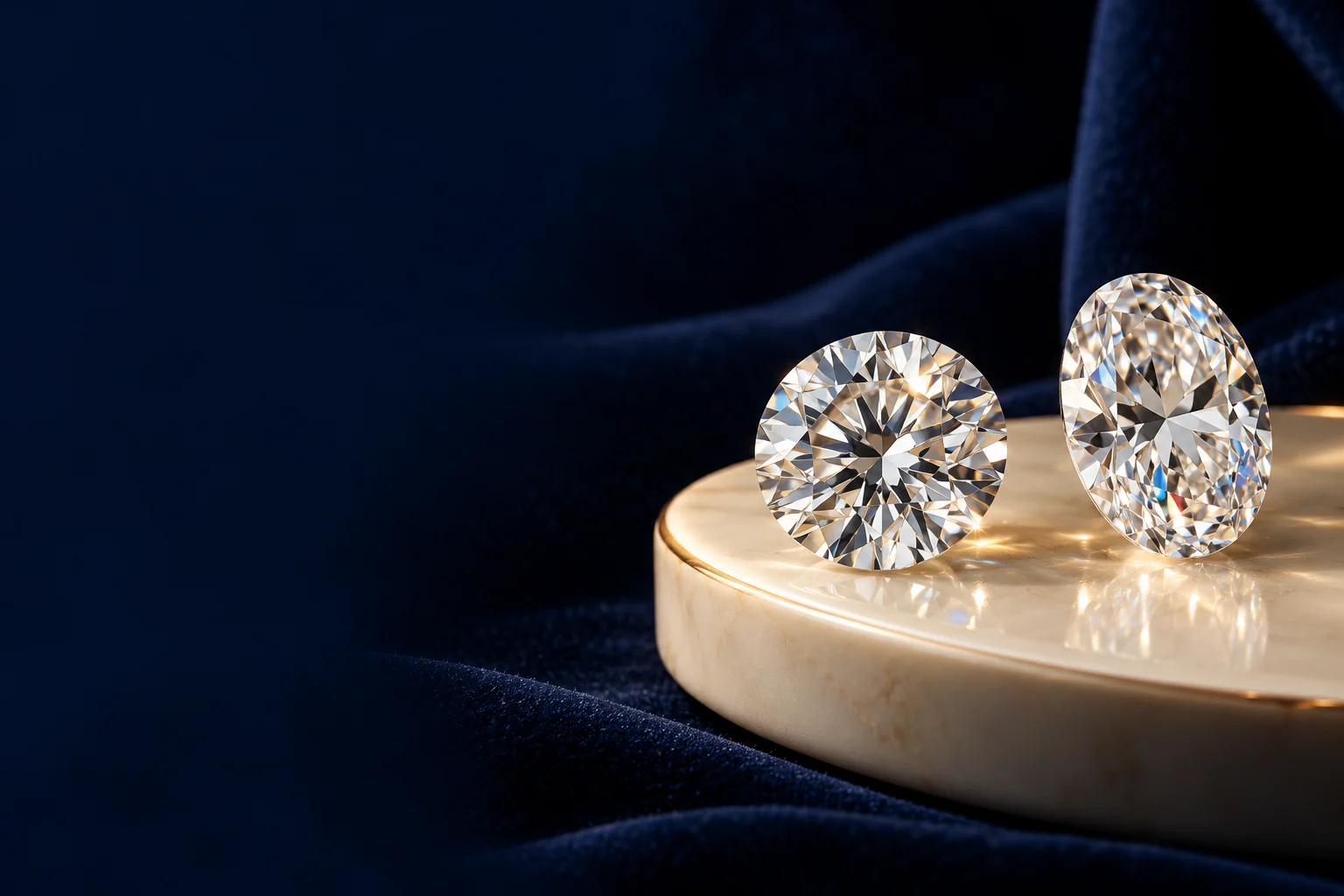
Lab-grown diamonds are often described as if they were something else — a substitute, a simulant, a close relation. They are not. A lab-grown diamond is a diamond. The difference is where it began, not what it is.
What is identical
Put a lab-grown diamond and a mined diamond side by side and the list of things they share is long:
- Chemical composition. Both are pure carbon.
- Crystal structure. The same arrangement of atoms, which is what makes a diamond a diamond.
- Hardness. Both are as hard as any material you will wear.
- Refractive index. Both bend and return light the same way — the same brilliance, the same fire.
Because the stones are the same material, they are graded the same way. Independent laboratories grade lab-grown diamonds on the same scales, with the same equipment, against the same four Cs as a stone that came out of the ground. A grade means the same thing on either certificate.

What is different
There are three real differences, and it is worth being clear about each.
Origin
A mined diamond formed deep in the earth and was brought to the surface. A lab-grown diamond was grown from carbon in controlled conditions above ground. One is not more of a diamond than the other; they simply have different stories.
Traceability
A lab-grown stone comes from a known source, so where it was made is a matter of record. For some people that is the deciding point.
Price
A lab-grown stone of the same grade generally costs a fraction of its mined equivalent. That is the whole reason a larger, better-cut stone comes within reach — the same budget goes further on the things you can see, such as cut and size.
Can you tell them apart?
Not by eye, and not with a loupe. Telling a lab-grown diamond from a mined one takes specialist laboratory equipment. On the hand, the two look exactly alike — which is the point.
What to look for, either way
The questions are the same whichever you choose. Ask who graded the stone, and read the certificate rather than the description. Look at the cut grade before anything else, because that is what decides how the stone looks. And judge the colour in the metal it will be set in: a grade that reads faintly warm in white gold can read perfectly white in yellow or rose.
How to choose
There is no wrong answer here, only the one that suits you. If the story of a stone formed in the earth matters most, a mined diamond tells it. If you would rather put the same budget into a better cut or a larger stone, lab-grown gives you that. Either way, choose the stone by the same rules: cut first, colour to white in your metal, clarity to eye-clean — our guide to the 4Cs explains why.
Whichever you choose, the setting matters as much as the stone. Our metals guide explains how white, yellow and rose gold, platinum and silver each wear. You can read the short version of this article on Lab-grown vs mined, or browse our necklaces and bracelets.